
Junior Group
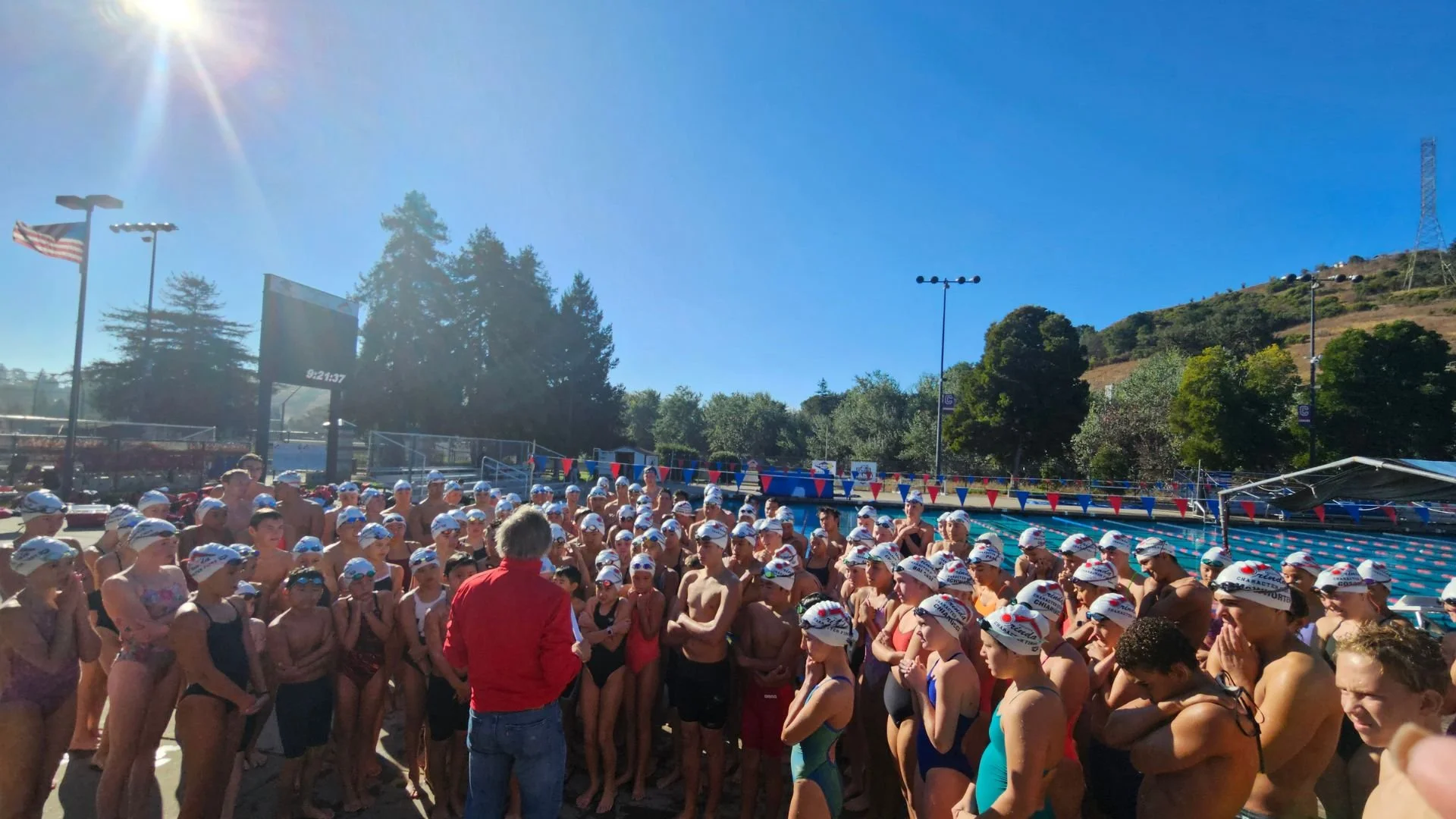
Orinda Aquatics takes great pride in its development of age-group swimmers. With the large presence of summer-league swimming, Orinda Aquatics has maintained a junior group (pre-high school) of approximately fifty swimmers. Given this number, Orinda Aquatics has been highly competitive in meets such as JO's (Age-Group Champs) and Far Westerns and has seen a number of these swimmers develop to the Sectional and Futures level within the group. The focus on this group is three-fold; stroke development/balance in the water, efficient training, and leadership. Yardage is kept at moderate level with the emphasis on distance-per-stroke and efficiency. Swimmers learn stroke counts and stroke rates and develop speed underwater. Additionally, the group has regular meetings to discuss life skills, leadership, and values as they relate to young adults and athletes. The groups also have dry land (SwimStrong Dryland) two to three times per week.
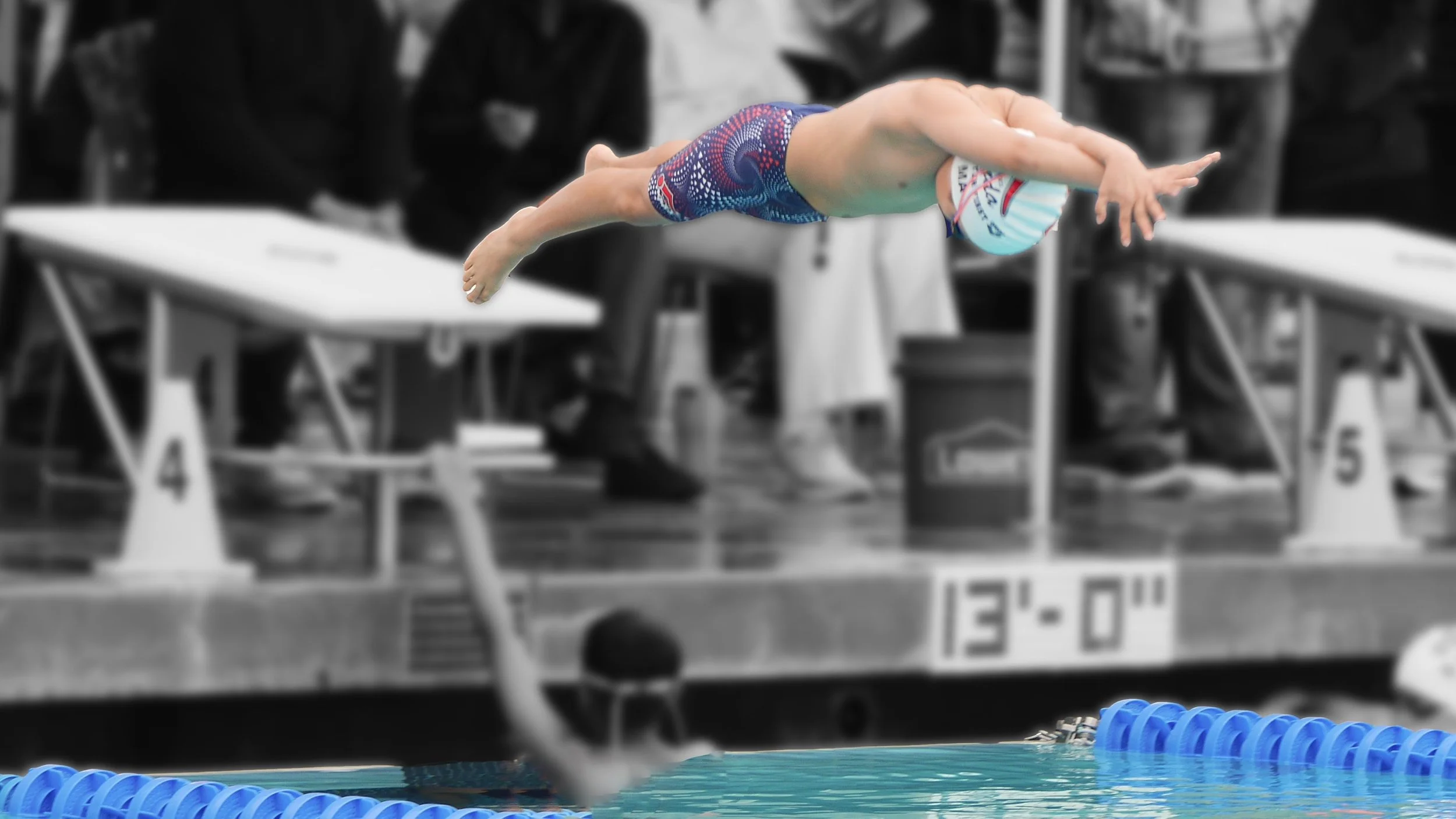
Orinda Aquatics Junior Group consists of swimmers between the ages of 8 and 14 (8th grade). The Junior Group is divided into three groups – Junior 1, Junior 2 and Junior 3, depending on age/grade, training ability, time standards, attendance, and maturity. The training schedule is the same for all groups (with some slight adjustments).
The Long-Term Perspective
With regard to Orinda Aquatics in general, as it relates to the Junior Group and long-term perspective the team has, 80% of our graduating high school student-athletes continue to swim at the collegiate level. Beyond this, the team has seen sixty graduates become collegiate team captains at some of the finest academic institutions (and swim programs) in the country. This philosophy and intent begins in the Junior Group, with leadership orientation and a training philosophy that is built around a long-term development in a team-oriented environment.
Our Three-Fold Focus
Rather than overloading young athletes with yardage, our program philosophy centers on long-term development across three key pillars:
Stroke Development & Balance: Yardage is kept at a moderate, purposeful level. We focus heavily on distance-per-stroke, efficiency, stroke counts, and building exceptional underwater speed.
Efficient Training: The vast majority of training centers on technique keys, balance and distance-per-stroke, and controlled training. This methodology has yielded exponential benefits as young athletes move on to senior and collegiate swimming. Additionally, the group integrates SwimStrong Dryland (peer-led) training 2 to 3 times per week to build core strength, mobility, and injury prevention.
Leadership & Values: The group holds regular meetings to discuss life skills, leadership orientation, and core values as they relate to young athletes.
Group Structure & Paths
The Junior Group is divided into three distinct tracks based on age, training ability, time standards, attendance, and maturity. While the general schedule remains aligned, the commitment and focus scale with the athlete's progression.
Junior 1
Lead Coach: Tiffany Forbes
Primary Focus: Core developmental foundation, technical mechanics, and race orientation. These swimmers are also introduced to the dryland fitness program and the leaders/character culture.
Target Milestones: Local age-group meets and Age-Group Champ qualifying.
Weekly Commitment: 4-6 sessions per week. Swimmers are support in participating in other sports.
Junior 2
Lead Coach: Matt Ehrenberger
Primary Focus: Refining technique, developing training principles, and learning race and meet management.
Target Milestones: Preparing for the 200 of each stroke, 400 IM, and 500 Free; and pursuing Age-Group Champ and Far Western qualifying times.
Weekly Commitment: 5-6 practices per week.
Junior 3
Lead Coach: Donnie Heidary
Primary Focus: Full competitive commitment, fine-tuning advanced technique, maximizing stroke balance, training with aggressive underwaters, stroke counts and stroke rates; learning race strategy, and ultimately preparing for Senior swimming.
Target Milestones: Pursuing Far Westerns, Sectionals, and Futures qualifying times.
Weekly Commitment: 6-7 practices per week (1 AM session optional).
-
Junior Group Handbook
-
Junior Group Kick-Off Meeting
Age-Group Development: Introduction
(from a speech given by Donnie at an ASCA Age-Group coaches clinic)
2025 Age-Group (14&U) Success 2025
Top Age-Group Programs Nationally (ASCA Top 50 Recognition)
Rather than examining one specific area of age-group swimming, this presentation will offer a broad-based approach to building a strong foundation within an age-group program, as well as building a culture that produces not only success, but development at all levels, with swimmer retention and career longevity.
Most coaches believe that Senior success begins at the age group level and focus extensively on technique and/or training with younger swimmers. While these are the two main drivers in development, this talk will suggest that there are numerous other critical components of a strong age-group program; areas that go well beyond technique and training, with most being on the “dry” side of the process. And while many will contend that age-group success can be defined by producing younger swimmers who rank high nationally, I would argue that true success should be measured at each level of ability, in retention of athletes, in longevity of careers (collegiate swimming), in emotionally well-balanced athletes who create a positive, integrity-driven culture, and in elite performance. The focus of age-group swimming should be as much on process and culture as on talent, as we can control the former.
This presentation suggests that the building of an age-group program is analogous to assembling a puzzle. The first and most critical step is to secure the corners of a puzzle (or the “cornerstones” of the program). We would define these as: 1) disciplined technique, 2) efficient training, 3) coach competence, and 4) structure, organization, and planning. The next phase in development is to secure the borders of the puzzle (or the “framework” of the program), in asense holding everything together. The right and left borders of this puzzle are integrity and discipline. In a grossly oversimplified view, this would equate to (integrity) doing everything correctly, with respect for all aspects of the program, and (discipline) performing at the highest and most productive levels of effort and intent. The top border is “connection” or swimmer relationships. Everything is enhanced with a strong connection between coach and swimmer. We have seen even the brightest coaches allow swimmers and programs to slip away because they are not connected to their athletes. The lower border or “base” of the program is culture. Culture is the tailwind that creates flow to a team’s or coach’s vision. It is analogous to a river flowing downstream with program momentum or a coach having to paddle upstream.
With regard to the other “pieces” of the (age-group) puzzle, we have identified over forty. With the corners, borders, and the puzzle pieces identified, we also offer some perspective on the (assembly) process, exploring concepts such as time frame, priorities, fluidity, methodology, and management. The ultimate goal of an age-group coach should be to 1) develop or lay the groundwork for great careers, 2) develop great athletes who embrace the athletic process, and 3) develop leaders who become role models for the process and the entire organization, thus defining the culture.
We have been coaching swimming for over forty years with extensive experience coaching large summer-league programs, large high school programs, and have twenty-five years with Orinda Aquatics. The programs have all been nationally competitive and grounded in discipline, integrity, technique, and culture. We have worked with swimmers of all ages and abilities and sought to develop close relationships (and partnerships) with each. We have no “burnout” and all of our swimmers (70+ in high school) look to swim in college. We truly believe that a “whole-istic” approach is not only more productive, but healthier and more fulfilling for all involved.